Do You Really Need an ERP?

ERP can transform a growing business, but only when the timing is right. Learn when you need ERP, when to wait, and how to avoid adding complexity too early.
ERP is powerful, but not every business needs it immediately. This guide helps you understand when ERP makes sense, when to wait, and how to choose the right system for your stage.
The ERP Question Every Growing Business Faces
ERP systems are often seen as a sign of business maturity. But not every growing business needs one immediately.
Some companies implement ERP too early and create unnecessary complexity. Others wait too long and lose money because their operations become disconnected. The real question is not whether ERP is powerful. It is whether your business is ready for it.
Signs You Have Outgrown Spreadsheets
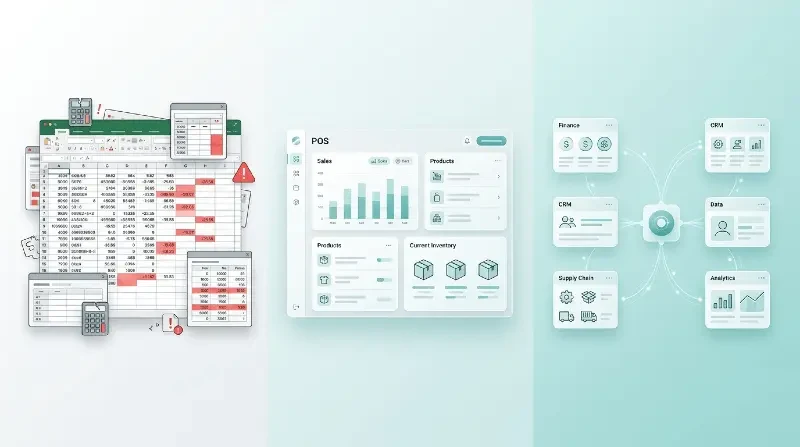
Spreadsheets work well in the beginning. They are flexible, familiar, and easy to start with. But as the business grows, the same flexibility becomes a problem.
You may be ready for ERP when your inventory numbers are no longer trusted, your accounting team spends hours reconciling data, reports take too long to prepare, or different departments are working with different versions of the truth.
The tipping point usually comes when manual errors start costing real money: stockouts, duplicate orders, wrong prices, delayed invoices, or decisions based on outdated data.
When You Do Not Need an ERP Yet
Most small teams do not need ERP on day one. If you have a simple operation, one location, a small team, and clear processes, a well-structured POS system, accounting tool, or even organized spreadsheets may be enough for now.
Implementing ERP too early can slow the team down. You may pay for modules you do not use, train people on workflows they do not need, and add layers of approval before the business is ready for them.
The goal is not to buy the biggest system. The goal is to use the right system for your current stage, with room to grow later.
When ERP Starts Making Sense
ERP starts making sense when the business becomes too connected for separate tools. Sales affects inventory. Inventory affects purchasing. Purchasing affects accounting. Accounting affects reporting. At that stage, disconnected systems create delays and mistakes.
Common readiness signs include multiple departments sharing data, inventory across more than one location, growing monthly revenue, complex approvals, and reporting that depends on several disconnected files or systems.
This is where systems like Odoo can help: not because ERP is trendy, but because the business needs one shared source of truth.
How to Decide Before You Invest
Before choosing ERP, ask simple questions: What is breaking today? Where are errors costing money? Which reports take too long? Which teams depend on the same data? What process needs to become more controlled?
If the problem is only sales tracking, you may need POS. If the problem is accounting visibility, you may need better accounting setup. If the problem is disconnected operations across departments, ERP becomes a serious option.
A good ERP decision starts with the business problem, not the software name.
Final Thought
ERP is not a milestone every business must rush toward. It is a tool for a specific stage of growth.
Use it too early, and it creates complexity. Use it too late, and the business keeps losing time and money. The right timing is what makes ERP valuable.