Choosing the Right Tech Stack for Your Startup
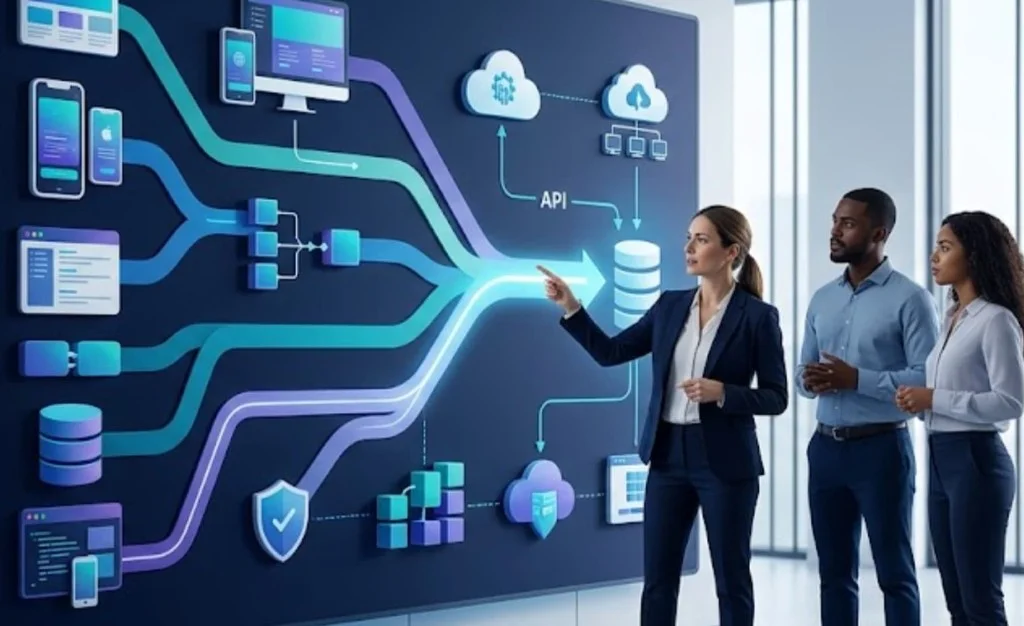
A practical 2026 guide to choosing your startup’s web, mobile, backend, database, and cloud stack without unnecessary complexity.
Your tech stack shapes launch speed, hiring, cloud costs, security, and scalability. This guide explains how founders can choose a practical stack for an MVP and build a clear path toward production.
Your Tech Stack Is a Business Decision
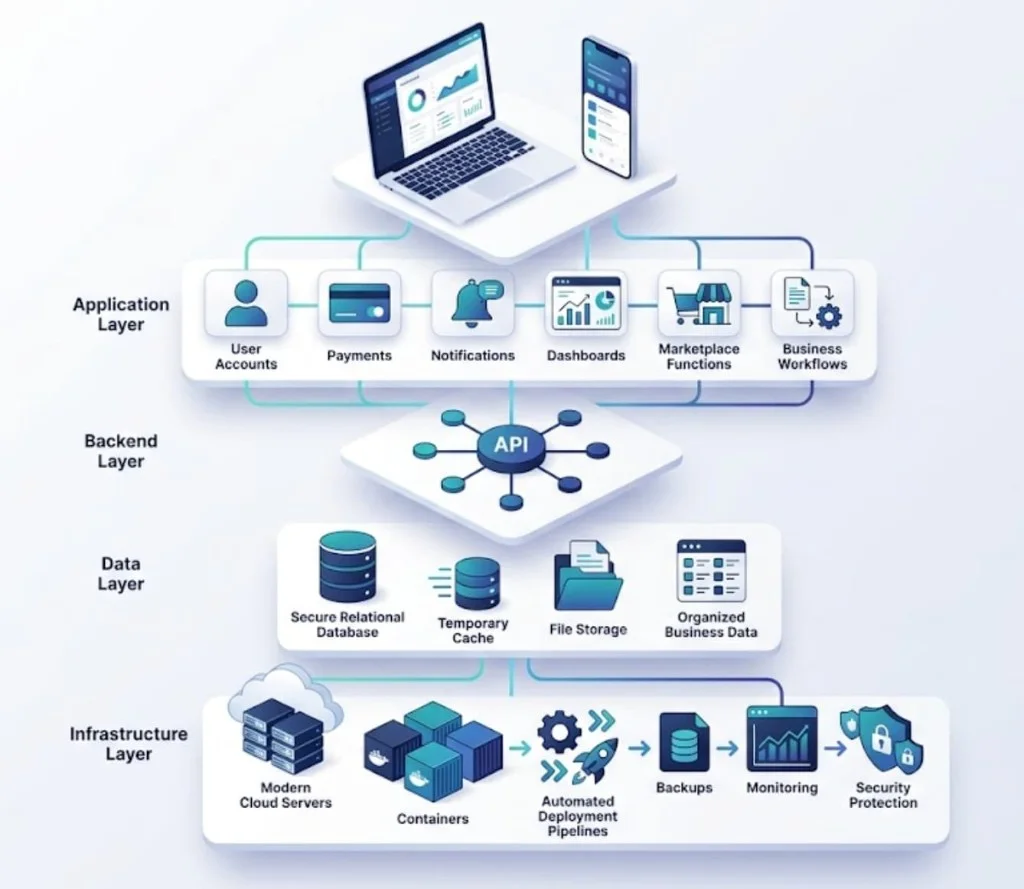
A tech stack is the combination of technologies used to build and operate a product: web and mobile frameworks, backend, database, cloud infrastructure, and supporting tools. These choices affect launch speed, hiring, maintenance costs, security, and scalability.
The best startup tech stack is not the newest one. It is the simplest proven combination that fits the product, team, budget, and next stage of growth. A strong choice helps you validate the business without creating an expensive rebuild later.
Start With Constraints, Then Choose the Architecture
Before comparing Flutter, React Native, Node.js, Python, or cloud providers, define the first release deadline, available budget, team skills, required integrations, expected traffic, offline needs, and security or compliance requirements. These answers remove many unsuitable options immediately.
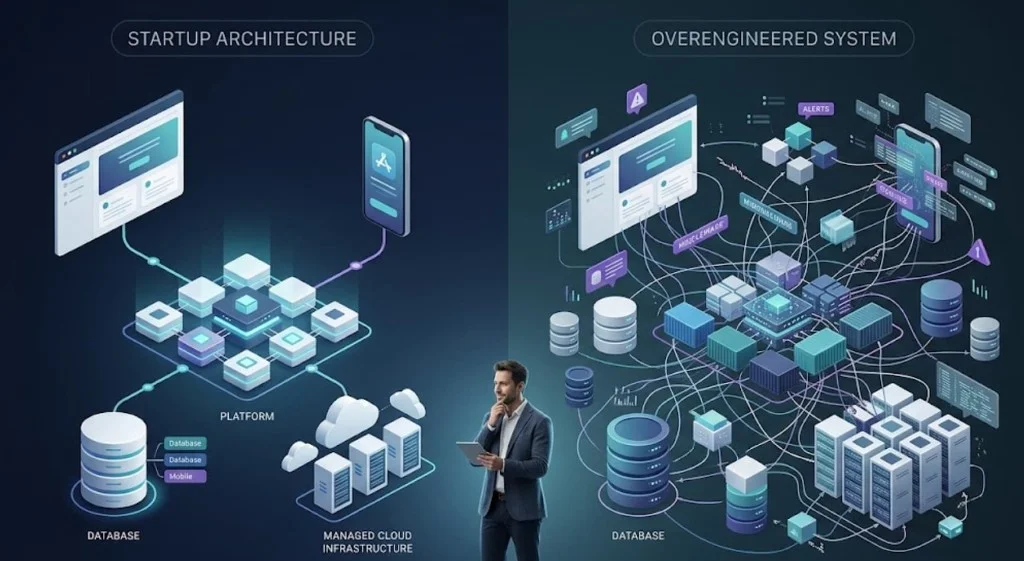
For most early-stage startups, a modular monolith is a better starting point than microservices. It keeps deployment, testing, debugging, and data consistency manageable while separating the code into clear business modules. Split services later only when scale, reliability, team ownership, or independent deployments create a real need.
A Practical Startup Tech Stack for 2026
There is no universal stack, but the following combination is a strong default for many SaaS products, marketplaces, operational platforms, and mobile applications. It prioritizes mature ecosystems, maintainability, hiring availability, and a clear path from MVP to production.
Web: Next.js with TypeScript
Next.js is a strong choice for public websites, dashboards, SaaS interfaces, and e-commerce products. It provides solid SEO foundations and flexible rendering, while TypeScript improves code clarity and catches many errors before production.
Mobile: Flutter or React Native
Choose Flutter for strong visual consistency and one dedicated cross-platform codebase. Choose React Native when your team already has deep React and TypeScript experience. Validate maps, payments, notifications, background tasks, hardware access, and offline behavior before committing.
Backend: Node.js or Python
Node.js with NestJS is a practical default for APIs, integrations, notifications, dashboards, and real-time features. Python with FastAPI is often better for AI, data processing, document analysis, and scientific workloads. A product can also use Node.js for its core platform and a focused Python service for AI.
Database: PostgreSQL First
PostgreSQL is the safest default for most business products because users, permissions, orders, subscriptions, inventory, and payments are relational. It also supports JSON when flexibility is needed. Choose MongoDB only when the data is genuinely document-oriented and the reporting trade-offs are understood.
Infrastructure: Managed Cloud and Docker
Use managed databases, object storage, backups, and monitoring where they reduce operational risk. Docker keeps environments consistent, and a simple CI/CD pipeline makes deployments repeatable. Most MVPs do not need Kubernetes on day one; add it only when multiple services, resilience, or platform-scale operations justify the overhead.
Match the Stack to the Product
The right stack changes with the product’s dominant risk. Use these combinations as starting points rather than rigid rules.
SaaS or Marketplace
Next.js, NestJS, and PostgreSQL form a strong base. Prioritize authentication, permissions, billing, order states, payments, inventory consistency, and third-party integrations before adding specialized services.
Mobile or Field Operations
Flutter is often a strong fit, but offline storage, synchronization conflicts, background location, battery use, delayed uploads, and average Android devices may matter more than framework benchmarks—especially for logistics, delivery, and distribution products in MENA markets.
AI-Enabled Product
Keep the transactional platform and AI workload conceptually separate. Use Python where it adds value, and design for model costs, data privacy, version tracking, evaluation, human review, and fallback behavior—not only an impressive demo.
Security and DevOps Should Start Small—but Start Early
An MVP does not need enterprise bureaucracy, but it needs separate development and production environments, protected secrets, least-privilege access, validated inputs, dependency updates, backups, restoration tests, useful logging, and basic monitoring. Automated tests should protect the flows that create or safeguard revenue, such as login, checkout, payments, subscriptions, permissions, inventory movement, and critical integrations.
Let Hiring and Operating Cost Influence the Decision
A technically elegant stack can still become a business risk if developers are difficult to find, expensive to replace, or unsupported by reliable agencies and documentation. Compare the local and remote talent pool, salary expectations, onboarding time, community maturity, and availability of experienced technical leadership—not only benchmark results.
Also estimate the first-year operating cost, including hosting, monitoring, backups, third-party APIs, app-store maintenance, security updates, and production support. The cheapest technology to build is not always the cheapest platform to own. A slightly more familiar stack can be the better investment when it reduces delivery and maintenance risk.
Common Tech Stack Mistakes
Avoid choosing technologies because they are trending, adopting microservices before the team can operate them, using several databases without a clear need, rebuilding services that managed platforms already provide, ignoring hiring availability, and optimizing for millions of users before finding paying customers. Every extra language, database, and deployment method creates a long-term ownership cost.
Another common mistake is allowing every new developer or agency to introduce a preferred framework. Exceptions can be justified, but deliberate standardization makes onboarding, debugging, security reviews, and long-term ownership much easier.
A Founder’s Tech Stack Checklist
Before approving the stack, ask: Can we launch within the deadline? Can we hire or replace developers? Are payments, maps, notifications, hardware, ERP, and other integrations proven? What happens when connectivity is poor? How will data be backed up and restored? Who owns production after launch? Which parts can remain simple for the next twelve months? A strong technical proposal should answer these questions in plain business language.
What We Usually Recommend at Weave Wider
For many startup products, our preferred starting point is Next.js and TypeScript for web, Flutter when a dedicated mobile app is needed, NestJS and Node.js for the main backend, PostgreSQL for core business data, and managed cloud services with Docker-based deployments. For AI-heavy workflows, we add focused Python services.
This is a default, not a rule. The right startup tech stack should launch a maintainable product, support real operations, and evolve without a costly rebuild every year. Choose for the next stage of the business, not for every possible future.